
Hearts: Classic Card Game
Topy GamesCard
4.71.14K Reviews
- Version
- 1.3.17.20260703
- Installs
- 1.00M
- Age Rating
- Everyone
Screenshots
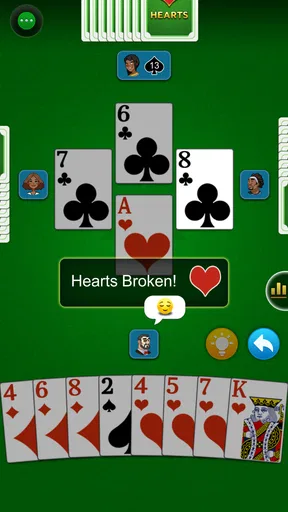
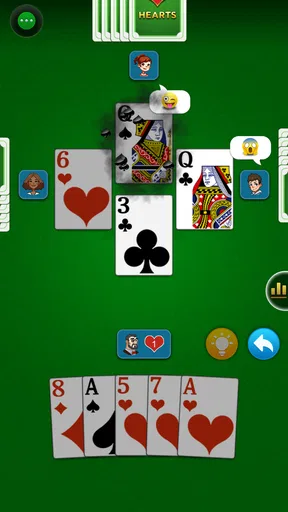
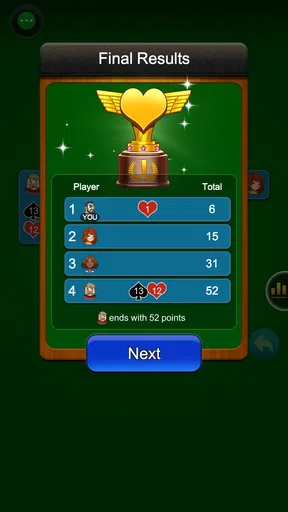
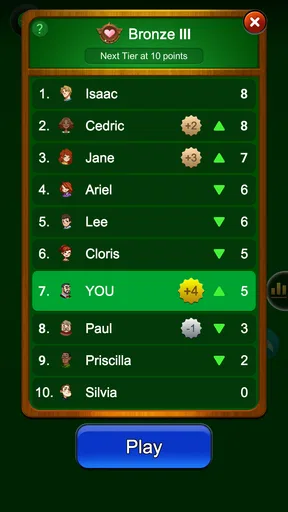
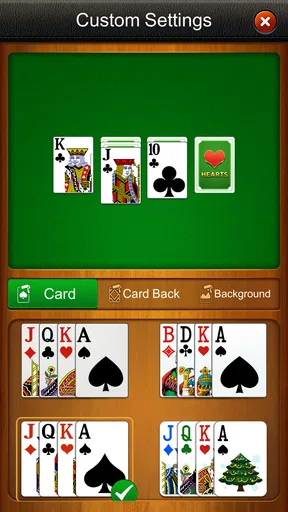
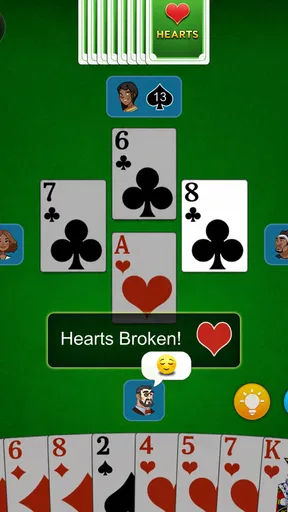
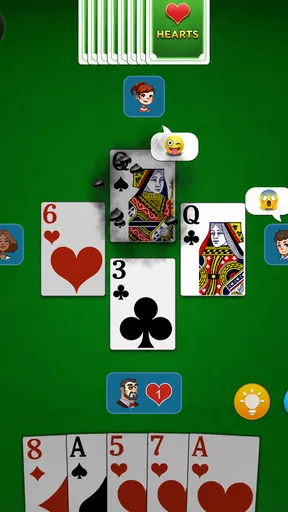
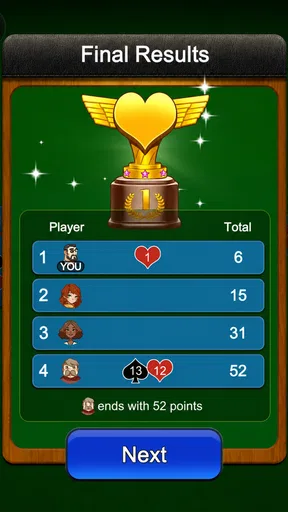
Our Review of Hearts: Classic Card Game
 Analysis by Appyee
If you have never played Hearts on a phone, Hearts: Classic Card Game is an approachable place to begin. I found the basic idea easy to understand after a single hand, while the decisions became more interesting once I stopped treating every trick as something to win. This is a free card game from Topy Games, built around the familiar trick-taking rules and computer opponents described as smart AI. It is aimed at Everyone, so it works well for a quiet break, a short mental workout, or anyone who wants to learn the game without finding three other people first.
The game has attracted a 4.7 average from around 50 thousand ratings, with more than 1 million installs. Those figures suggest that it has found a broad audience, but popularity is not the main reason I would recommend trying it. The stronger point is its low barrier to entry: you can open a traditional card game, learn through play, and gradually become more deliberate about which cards you pass, which tricks you avoid, and when you risk taking control.
What to expect when you start playing
Hearts is not a race to collect the most tricks. That is the first idea I would keep in mind before starting. In a normal hand, taking certain cards can hurt your score, so the game rewards careful avoidance as much as confident play. That makes it feel different from many casual card games where winning a trick is almost always good news.
The app presents itself as a classic trick-taking game rather than an elaborate collection of modes. That focus is useful for a new player. You do not need to learn a large set of menus, characters, or special abilities before making your first decision. Your attention stays on the cards in your hand and on what the other players may be trying to discard.
My first useful adjustment was to stop looking only at my strongest cards. A high card can be dangerous if it forces me to win a trick containing penalty cards. A weak-looking hand can sometimes be easier to manage because it gives me more ways to follow suit without taking control. That change in perspective is what turns the app from a simple time filler into a small strategy exercise.
The computer opponents also change the feel of a solo session. Playing against AI is convenient when I have only a few minutes or do not want to coordinate a multiplayer match. It is less personal than playing with friends, and experienced players may eventually notice patterns in computer decisions, but it makes the game immediately available whenever I want a hand.
For a first-time user, the best expectation is not instant mastery. Your first few rounds are mainly about learning the rhythm: cards are played in sequence, players generally follow the suit led when they can, and the winner of a trick affects who leads next. Once that rhythm feels natural, the more important question becomes whether you can keep unwanted cards away from yourself.
How I approached the first setup
Because the game is free, there is no purchase decision blocking the first session. I would install it, open it, and begin with the default experience rather than searching for every available option. That keeps the learning curve short. The current version is 1.3.17.20260703, and the app supports devices running Android 6.0 or later, which makes it accessible on many older Android phones as well as newer ones.
The age rating is Everyone, which matches the straightforward nature of the game. I would still suggest starting somewhere quiet enough to concentrate. Hearts does not demand fast reflexes, but it does punish careless attention. If you play while watching a video or answering messages, it is easy to forget which suits have already appeared or to miss that you are about to take a dangerous trick.
In-app purchases are listed at $9.99 per item. That is worth knowing before you begin, even though the game itself is free. My practical advice is to play enough hands to decide whether the core experience suits you before spending anything. A purchase cannot solve the central challenge of Hearts, which is reading the hand and managing risk. If you enjoy that challenge, the free entry point gives you a fair chance to discover it first.
On the first screen, I would look for the most direct route into a standard hand and avoid changing settings until I understand the basic flow. This is a useful habit with card apps: learn what the table is showing before customizing the experience. You want to identify your own cards, the cards played into the current trick, and the information that remains relevant for the next lead.
One small preparation step makes a big difference: decide before the hand begins whether your goal is to win tricks or avoid them. New players often switch between those ideas without noticing. In Hearts, that confusion creates many avoidable mistakes. A clear goal helps you evaluate each card instead of reacting to the most attractive-looking play.
The first meaningful success is avoiding the wrong trick
My definition of a successful first hand would not be a perfect score. It would be recognizing a dangerous trick and letting another player take it. That may sound passive, but it is the key lesson. When a suit is led, check whether you have cards in that suit. If you do, you usually need to play one of them, and the safest choice is not always the lowest card if that card could leave you exposed later.
Try this simple routine on every turn. First, identify the suit that was led. Next, check whether you can follow it. Then look at the cards already on the table and ask whether one of them could make the trick costly. Only after those checks should you choose a card. This takes a few seconds and prevents the most common beginner error: playing quickly because a card appears weak.
A second useful habit is to remember which suits are becoming scarce in your hand. If you run out of a suit, future tricks led in that suit may give you more freedom because you can discard from another suit. That freedom is valuable, but it can also be risky. You may be able to pass a penalty card to the trick, or you may accidentally take a card you desperately wanted to avoid. The important point is to treat an empty suit as an opportunity, not an automatic advantage.
Do not worry if the first few hands feel unpredictable. Hearts contains information that becomes clearer only as cards leave play. Instead of trying to remember every card, track the details that affect your next decision: which suits you cannot follow, whether dangerous cards have appeared, and which opponent seems likely to win the current trick. This lighter form of memory is enough to improve quickly without turning a casual game into homework.
One practical scenario shows where the app fits well. Imagine you have a coffee break and want something more engaging than scrolling, but you do not have time for a long game. A single Hearts hand gives you a contained decision-making activity. You can play slowly, pause your attention between turns, and return to the same basic rules without learning a new system. It is especially suitable for someone who likes puzzles but does not want a complicated strategy game.
Confusing moments that become clear with practice
The biggest source of confusion is assuming that the highest card always wins in the same way across the hand. The winner depends on the suit led and on the cards played in that trick. A high card from a different suit may not help you at all if you were unable to follow the lead. Once I started separating “high card” from “winning card,” the table became much easier to read.
Another common mistake is treating every penalty card as equally dangerous at every moment. Context matters. A card can be harmless if another player is certain to take the trick, but troublesome if you are currently winning it. This is why I recommend looking at the whole trick rather than judging one card in isolation.
New players may also wonder why a deliberately low card can be the best move. The answer is control. If you avoid taking the trick, you may preserve your stronger cards for a moment when they are safer, or you may keep an opponent from deciding the next lead. The move can feel unsatisfying because it does not look like an immediate victory, but it often protects your position.
Passing cards at the beginning of a hand can create another layer of uncertainty. I would not automatically pass the three highest cards or the three lowest cards. Consider what your hand lacks, whether you are likely to become free of a suit, and whether keeping one awkward card could give you a way to avoid a later trick. The best choice depends on the shape of the whole hand, not on a single card’s rank.
If the AI seems to make a surprising play, use it as a prompt to review the trick rather than assuming the game is behaving strangely. Ask what suit was led, who could follow it, and which player was positioned to win. Sometimes the computer’s move exposes a possibility that was easy to miss. At other times, the decision may simply feel different from a human opponent’s priorities. Either way, replaying the situation mentally is more useful than rushing into the next turn.
How this compares with other ways to play Hearts
The obvious alternative is a physical deck with friends. That option is better when you want conversation, visible reactions, and the unpredictability of human decisions. The app is better when availability matters. You do not need to gather a group, explain the rules repeatedly, or wait for everyone to be free. For learning the structure of the game, a solo table is often less intimidating than sitting with experienced players.
Another alternative is a broader card-game app that includes many different games in one package. Those collections offer variety, but they can also scatter your attention across menus and rule sets. Topy Games keeps this experience centered on Hearts. If you already know you want this particular game, that narrower focus is a strength. If you want solitaire, rummy, spades, and several other formats in the same place, a larger collection may suit you better.
Compared with playing Hearts through a browser, a dedicated app is more convenient for repeated short sessions because it is already on your phone. The trade-off is that you are committing to one developer’s presentation and computer opponents. Players who care most about online competition, live opponents, or extensive customization should check whether a different platform offers those priorities before settling here.
I also would not choose this app for someone who needs constant action. Hearts is thoughtful and turn-based. Its appeal comes from evaluating risk, waiting for the right moment, and accepting that a quiet move can be the correct one. If you prefer rapid matches, animated effects, or a strong social layer, this may feel restrained rather than relaxing.
Small techniques that make later hands more rewarding
Once the basic rules are comfortable, I recommend dividing your attention into three levels. At the first level, play the current trick correctly. At the second, consider who will lead the next trick. At the third, think about the suits you may be unable to follow later. Trying to calculate everything at once is tiring; moving through these levels keeps the decision process manageable.
Another technique is to identify your “escape” cards early. These are cards you can use when you cannot follow the led suit and need to avoid taking control. Do not spend them casually just because they fit the current trick. Saving one for a more dangerous situation can be more valuable than making a small improvement now. This is one of the first strategic ideas that made my sessions feel less random.
It also helps to notice who is leading after each trick. The player who wins is not merely collecting a card; they are choosing the next suit and shaping the table. If an opponent repeatedly gains that control, look for ways to avoid feeding them a favorable lead. You may not be able to prevent it every time, but recognizing the pattern makes your choices more purposeful.
When a hand goes badly, I would review the first decision that reduced your options rather than blaming the final trick. Often the problem begins with an early card that was used too soon, a high card retained without a plan, or a missed chance to become free of a suit. This kind of review is more useful than simply starting another hand because it turns a loss into a specific lesson.
The app can also work as a gentle way to introduce card-game strategy to a beginner. I would show a new player one decision at a time: follow the led suit when possible, watch who wins the trick, and ask whether the card being taken is helpful or harmful. That approach is less overwhelming than explaining every possibility before the first hand. After a few rounds, the player can begin making their own passing and avoidance choices.
Who should install it, and who should skip it
I think this game is a strong fit for first-time Hearts players, casual card fans, and people who enjoy quiet decisions more than spectacle. It is also useful for experienced players who want a readily available solo practice table. The free starting point makes experimentation easy, while the Everyone rating keeps the tone suitable for a broad audience.
I would be more cautious about recommending it to someone whose main requirement is human competition. Computer opponents provide convenience, but they do not reproduce the humor, bluffing, and changing habits of friends around a real table. I would also suggest looking elsewhere if you want a large range of card games rather than a focused Hearts experience.
The listed in-app purchase price of $9.99 per item is another reason to approach it as a trial first. Play enough to learn whether the basic loop holds your attention. If you find yourself thinking about the next hand during the day, the app has probably earned a place on your phone. If the avoidance-based scoring feels frustrating even after the rules make sense, paying for anything is unlikely to change that fundamental mismatch.
My recommendation after learning the rhythm
What I like most is that the game gives a beginner a clear path from confusion to competence. At first, success means understanding why a trick was won. Then it means avoiding one dangerous card. Later, it means shaping the next lead and protecting your options several turns ahead. That progression feels natural because every improvement comes from watching the table more carefully.
There is some friction in the limited scope. This is not a social card room, a story-driven game, or a giant collection of activities. Its value depends on whether you enjoy returning to the same rules and finding better decisions inside them. The AI may also feel less satisfying than real opponents for players who have already mastered Hearts and want a constantly changing challenge.
For me, those limitations are acceptable because the app understands its central purpose: provide a straightforward way to play Hearts whenever I have a spare moment. I would install it, begin with the standard hand, and focus on avoiding one unwanted trick rather than chasing a dramatic win. That first small success makes the rest of the strategy easier to understand.
My final advice is simple: use the first session to learn control, not to prove you are already good. Watch the led suit, protect your escape cards, and review the decisions that left you with fewer choices. If that style of play sounds satisfying, this free card game from Topy Games is an easy recommendation for solo practice and relaxed daily sessions.
Verdict
Strengths of Hearts: Classic Card Game
- Simple rules make it easy for beginners to start playing.
- Offline mode lets you play without an internet connection.
- Short rounds are convenient for quick gaming sessions.
- Adjustable difficulty provides a challenge for different skill levels.
- Clean card layouts make suits and values easy to read.
Limitations of Hearts: Classic Card Game
- Ads may interrupt play, especially in the free version.
- Advanced players may find the computer opponents predictable.
- Limited customization can make the experience feel repetitive.
- Some features may require in-app purchases or premium access.
- No real-time multiplayer may disappoint players seeking live competition.
Other Releases by Topy Games
View All

Spelling Quiz - Word Trivia
Word4.8

Trivia Master - Word Quiz Game
Trivia4.5

Gin Rummy: Classic Card Game
Card4.9
Similar Picks in This Category
View All
Solitaire - Classic Card Games
MobilityWare4.6

UNO!™
Mattel163 Limited4.3

Spider Solitaire: Card Games
MobilityWare4.6

Solitaire.com - Classic Cards
Tripledot Studios Limited4.7

Plants vs. Zombies™ Heroes
ELECTRONIC ARTS4.1

Hearthstone
Blizzard Entertainment, Inc.4.1
Frequently Asked Questions
What is Hearts: Classic Card Game, and how is it played?
Hearts: Classic Card Game is a digital version of the traditional trick-taking card game for mobile devices. You usually play against computer opponents, trying to score as few points as possible. Hearts and the Queen of Spades normally carry penalty points, while taking every penalty card can activate the risky “shoot the moon” strategy. The winner is the player with the lowest score when the game ends.
Can I play Hearts: Classic Card Game offline?
In most versions, Hearts: Classic Card Game can be played offline against artificial-intelligence opponents, making it suitable for travel or situations without an internet connection. However, certain features may require connectivity, including advertisements, online leaderboards, cloud synchronization, updates, or multiplayer services. Before downloading, check the store description and test the game with mobile data and Wi-Fi disabled if offline access is important to you.
Does Hearts: Classic Card Game include multiplayer or online matches?
Multiplayer availability depends on the specific version of Hearts: Classic Card Game and the platform you use. Some editions focus entirely on solo play against computer-controlled opponents, while others may offer online matches, local play, or leaderboards. If playing with friends is essential, review the current feature list carefully, because online modes can change between updates and may require an account or a stable connection.
Are there difficulty levels and customization options?
The game commonly provides several difficulty settings so beginners can learn the rules while experienced players face more competitive opponents. Depending on the edition, you may also be able to adjust player names, card designs, backgrounds, scoring rules, animations, sound effects, or the number of games in a match. These options make the experience more flexible, although the exact selection can vary between Android and iOS releases.
Is Hearts: Classic Card Game free to download, and does it contain ads or in-app purchases?
Many mobile Hearts games are free to install, but they may support development through advertising or optional in-app purchases. Ads can appear between rounds, on menus, or after a completed match, while paid upgrades may remove advertising or unlock additional themes and features. Check the app-store listing for current pricing, permissions, subscription details, and whether purchases are optional before installing.
Play our best games!


